
Measurement
Your tools measure themselves
Every CI tool measures its own jobs. Nothing measures how long a change takes to reach production — unless someone builds that, and keeps it working.

CI/CD delivery orchestration
Your pipelines push the events. Yontrack pulls the context. Builds, quality, dependencies and deployments in one model — without replacing any of your tools.
 Track. Trust. Deliver.
Release candidate
Is payments-api 4.7.2 ready?
Why now
Measurement
Every CI tool measures its own jobs. Nothing measures how long a change takes to reach production — unless someone builds that, and keeps it working.
Scattered evidence
Every tool holds part of the evidence. Seeing the whole picture means opening all of them — and the release waits while someone does.
Agents in the loop
AI agents produce change faster than people can review it — and version control records who committed, not what decided.
Three symptoms, one cause: the evidence of delivery is produced everywhere and kept nowhere.
What you get
Visibility
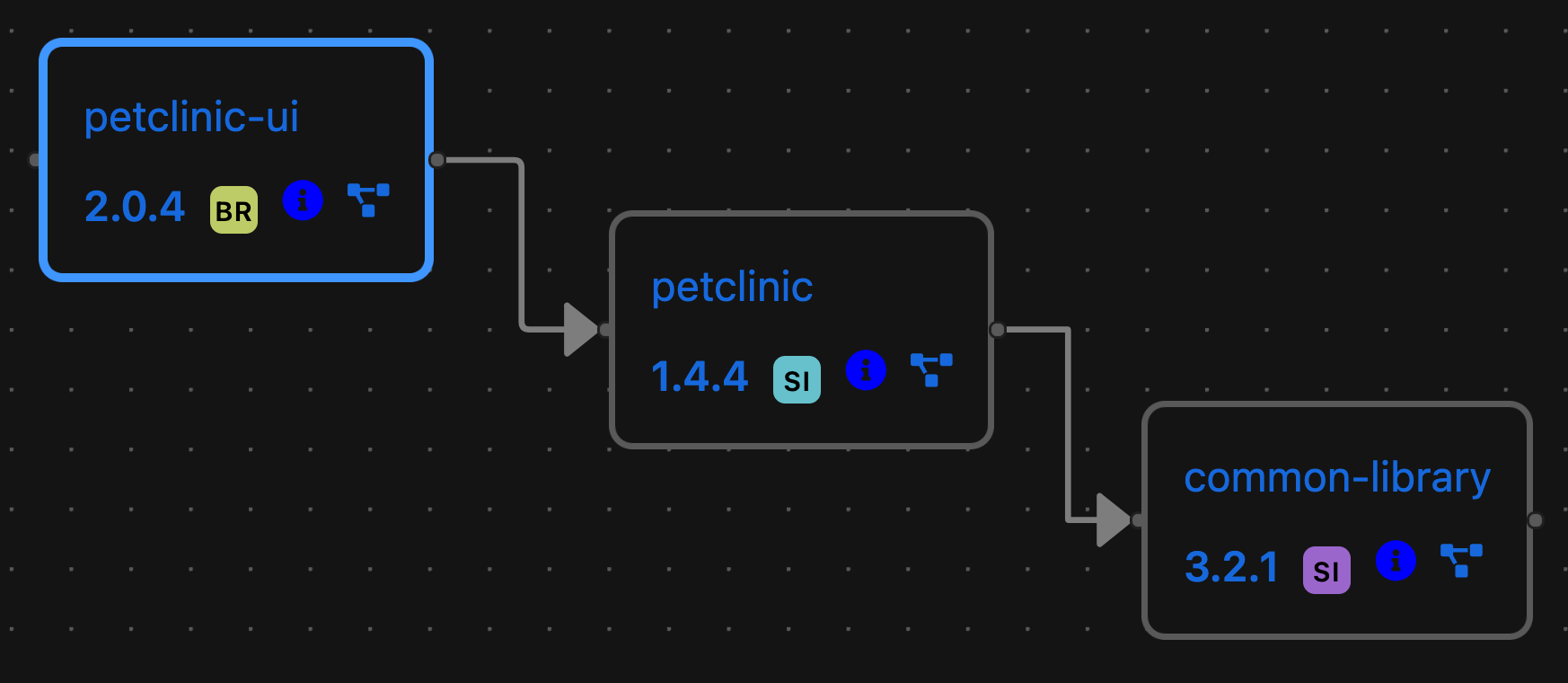
A green service on top of an unvalidated library is visible, not assumed.
Trust
An agent can open the pull request. It cannot grant itself GOLD.
Acceleration
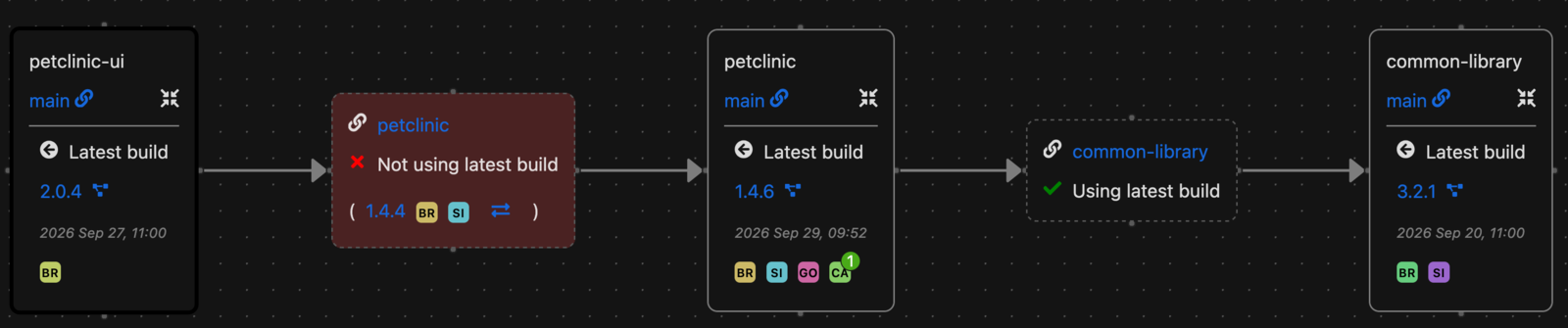
Defined with the code in .yontrack/ci.yaml, reviewed like the code.
Deployments
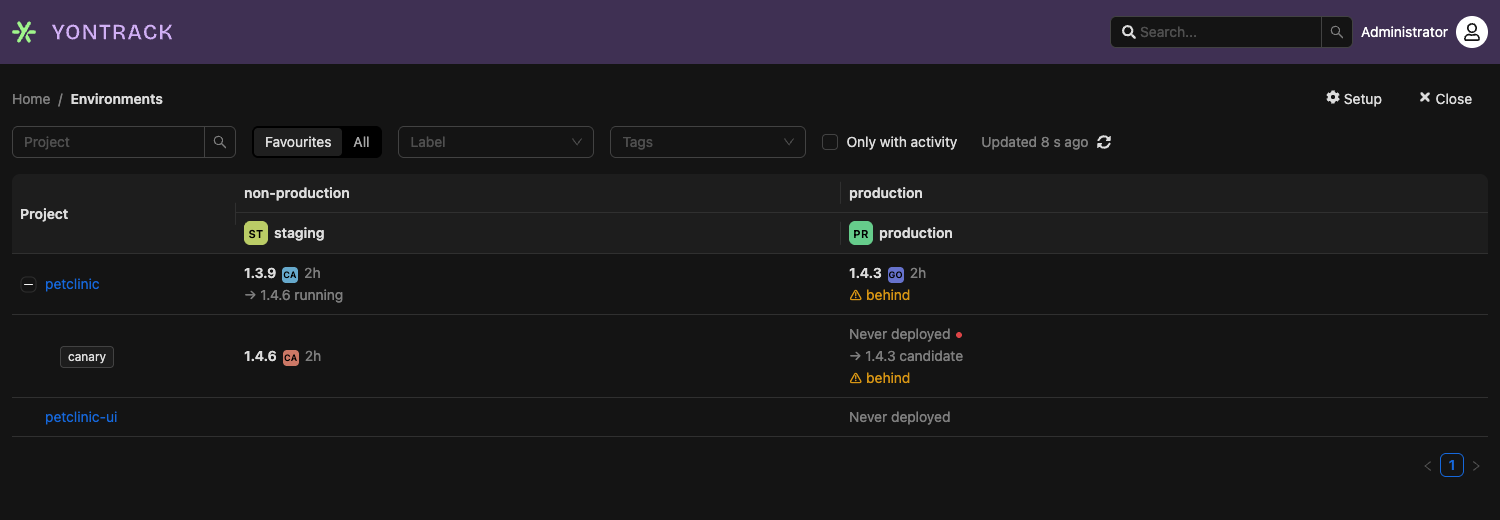
Deployments are first-class events: which version went where, when, who authorised it, and whether it succeeded.
Who it's for
Decide on live status instead of assembling it.
Feed data once with reusable pipeline steps, then drive automation across every project.
One entry point for the state of their own work — no more manual promotions or version bumps.
Answer “what's in this release, and is it ready?” without booking a status meeting.
Read delivery status and record evidence through the MCP server. Same record, same gates.
In production
“With Yontrack, we moved from scattered snapshots to end-to-end automation and traceability. Manual version bumps are gone, and every development build now produces its own uniquely versioned artifact.”


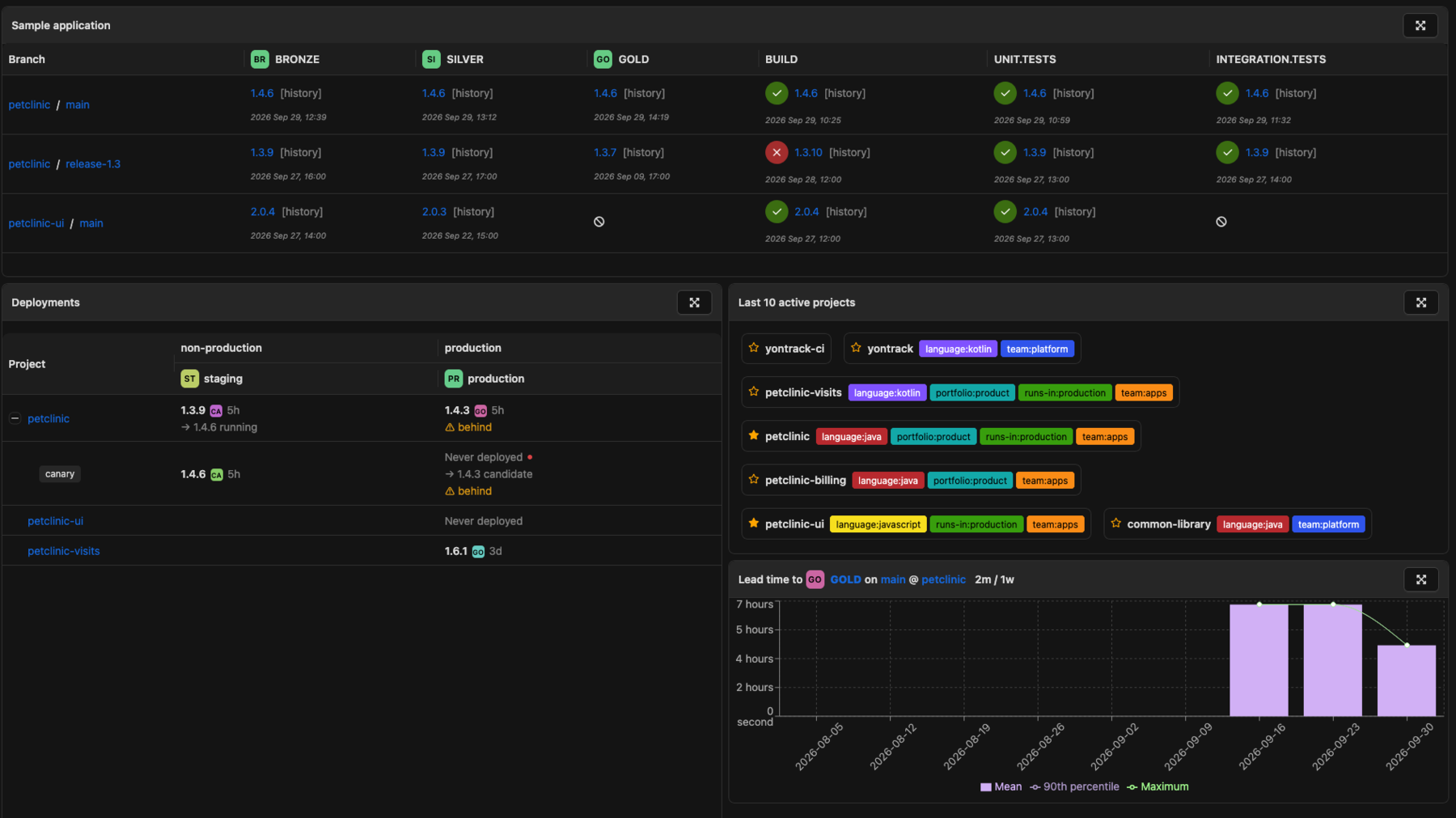
In production at scale-ups and corporate enterprises in fintech, data and pharma — some for more than ten years — tracking thousands of projects and millions of validation runs.
How it works
Yontrack joins your CI/CD ecosystem rather than replacing any part of it. No migration, no rewrite of pipelines. Your CI and your tools stay exactly as they are.
Push
Builds, validations and promotions — through a Jenkins shared library, a GitHub Action, or one CLI call per pipeline stage.
The record
Builds · validations · promotions · dependencies · deployments — queryable, shareable, automatable.
Out
First project reporting in an afternoon.
The core idea
What gets said today
“Yes — X passed its long integration tests, the security scan came back clean, and I think the perf run was fine?”
What gets said instead
“X is SILVER.”
Your levels, your meanings. Each level is earned automatically when the checks behind it pass — defined once, versioned with the code, identical across every team.
BRONZESILVERGOLD
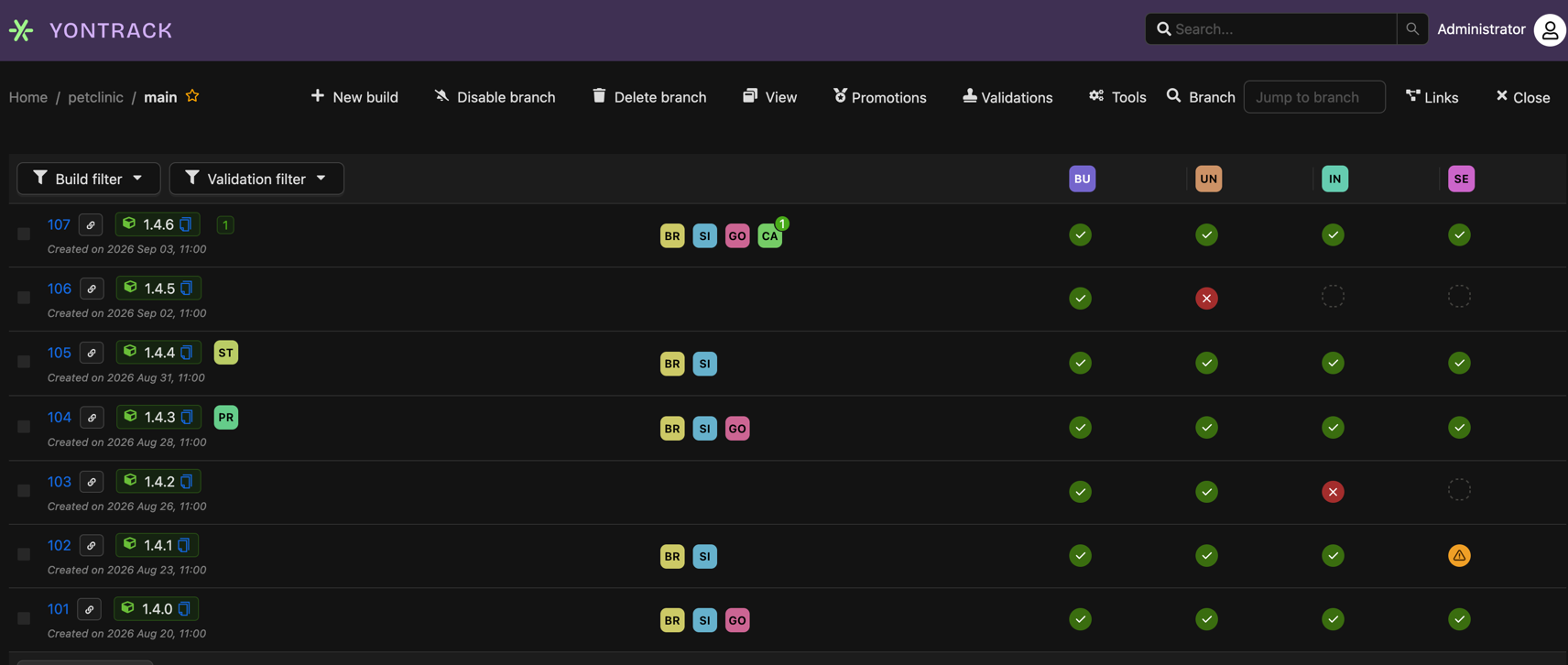
A promotion is a real event in the delivery graph, so it can start things. This is where a status board becomes an orchestration layer.
On promotion
Downstream repositories get a pull request raising the dependency.
On promotion
Slack, email, Jira — and Jenkins jobs or GitHub workflows, called the same way.
On promotion
Only versions at the required level become eligible for an environment.
On promotion
Sequences chaining approvals, jobs and notifications together.
Security findings
Yontrack records the findings of the scans your pipelines already run, and follows each of them over time: when it appeared, where it is still exposed, when it was fixed.

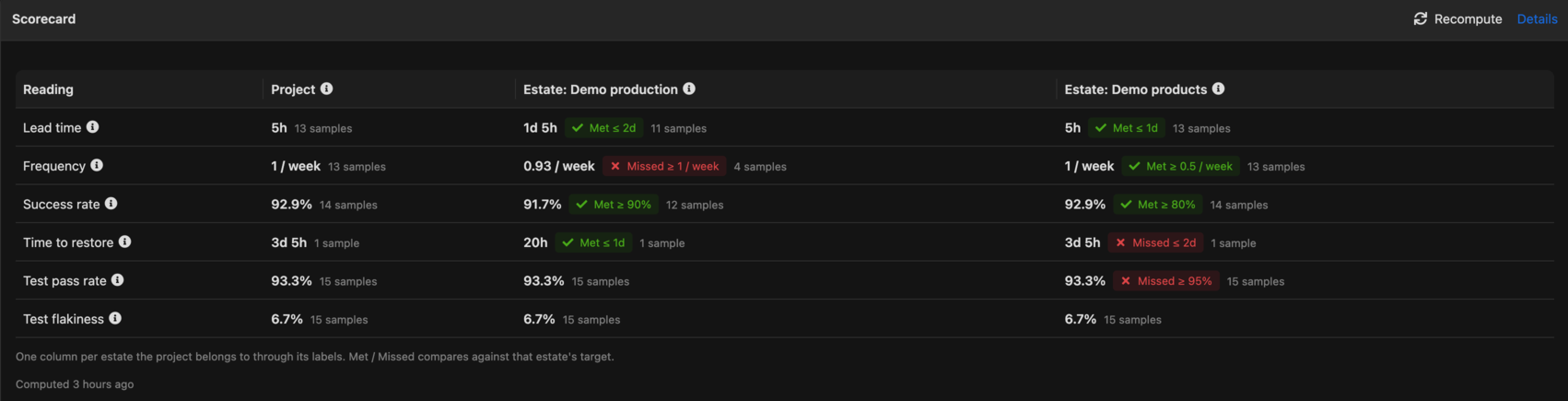
Delivery scorecard
Yontrack reads its own history. Every day, every project gets its readings — and Yontrack says plainly when it cannot tell.
For the people who will run it
Licence & support
On a small scale, free of charge.
Commercial licence, support, consultancy and training.
Runtime
Self-hosted by design. A Helm chart installs it on Kubernetes or OpenShift, with PostgreSQL, Elasticsearch and RabbitMQ.
Interfaces
GraphQL API, open-source CLI, webhooks and configuration as code — plus an MCP server and AI skills.
Governance
OIDC and LDAP, group mappings, granular project roles and API tokens for automation accounts.
How teams get there
Add reporting to one pipeline. Builds, tests and scans start landing in one place.
Release readiness becomes a page instead of a conversation.
Define the promotion levels your organisation will share, and put them in code.
Let those levels drive versioning, notifications and deployments across every project.
One team, one dependency chain, one release cycle — enough to measure the before and after honestly.
Services
Setup, implementation and strategic advisory.
Hands-on, in groups or one-on-one, in your workplace.
Day-to-day help, and a say in what gets built next.
Our vision of delivery, shaped by years in the field.